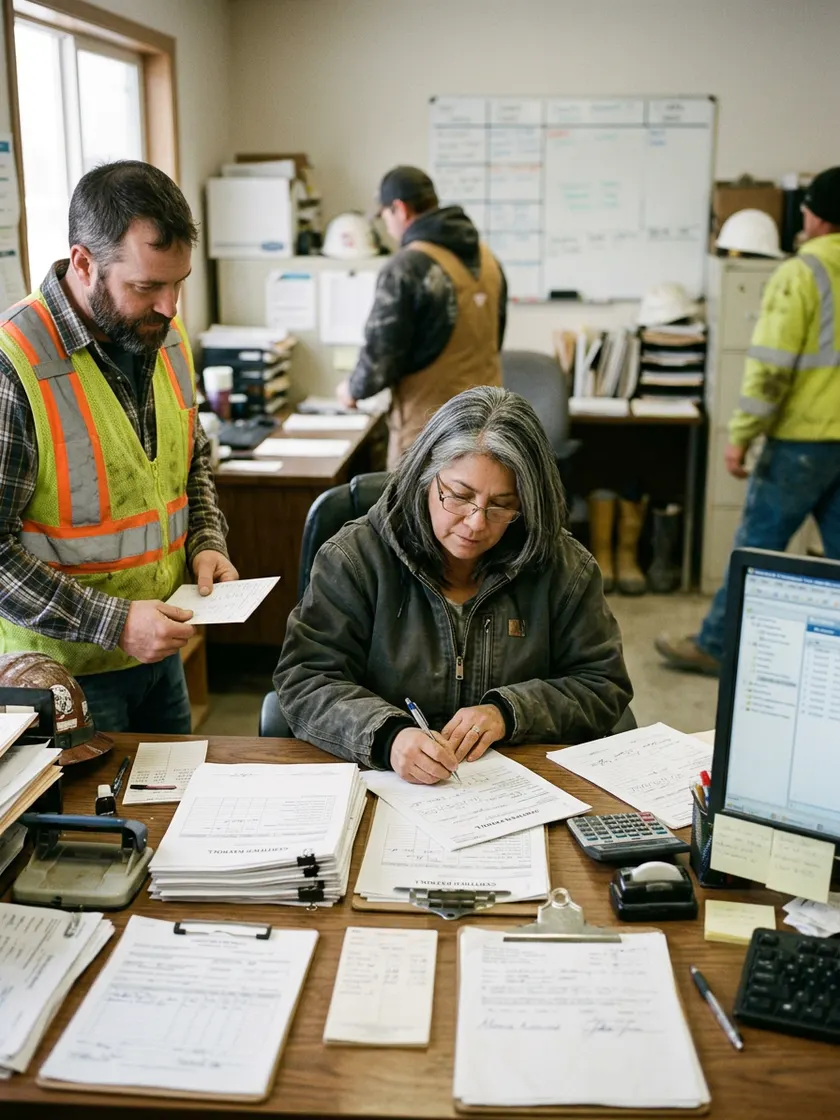
A city calls for a $10,000 repair to a park restroom. It's small, quick and close to the yard, the kind of job a lean crew can turn around in a week. It is also a California public work, which means every hour on it must be paid at prevailing wage. One missed certified payroll or one laborer paid as a helper can turn a modest profit into a five-figure penalty assessment.
The Labor Commissioner audits public works projects as a routine matter, and a prime contractor can be held responsible for wage violations by its subcontractors. Most contractors who get burned didn't ignore the law. They misjudged where it applies, missed a threshold, or used the wrong rate sheet. Fees, thresholds and forms also change, so confirm current figures with the Department of Industrial Relations before you bid.
How California defines a public work, and why private jobs get caught
California Labor Code Section 1720 defines public works as construction, alteration, demolition, installation or repair work done under contract and paid for in whole or in part out of public funds. Related provisions extend prevailing wage to maintenance work as well. The obvious cases are school district modernizations, city street and storm drain work, county tenant improvements and water district pipeline repairs.
The definition reaches further than most contractors expect. Under the statute, public funds include more than a check from an agency. They also include fee waivers, land sold below market value and public loans on favorable terms. A private developer who receives any of these may be building a public work, even though the owner is a private party. Many affordable housing projects carry prevailing wage conditions as well, including those approved under state streamlining laws such as SB 35 and AB 2011.
When a developer mentions city financing, a fee reduction or a land deal, ask directly whether the project is a public work, and get the answer in writing. If the answer is unclear, anyone can ask the Department of Industrial Relations for a formal coverage determination. It is better to settle the question before you price the job than after a wage claim arrives.
The dollar thresholds that trigger each obligation
California's thresholds are low, and each one turns on a different obligation. Prevailing wage applies to public works contracts over $1,000. That means nearly every public job a contractor will see is covered, however small.
A higher threshold triggers the administrative requirements. Construction projects over $25,000 require DIR contractor registration and electronic certified payroll, or eCPR. For alteration, demolition, repair or maintenance projects, the threshold drops to over $15,000. Below those amounts the paperwork is lighter, but the wage obligation is unchanged, and you still need to keep accurate payroll records in case anyone asks for them. That $10,000 restroom repair may not require registration, but the workers on it still get prevailing wage.
Apprenticeship requirements apply to contracts of $30,000 or more. These rules cover notifying apprenticeship committees, requesting apprentices and making training contributions. They catch many small firms off guard, especially subcontractors who assume the prime handles them. Read the apprenticeship section of the bid documents and DIR's guidance before you sign, not after the first payroll.
Handling projects that carry both state and federal money
The federal Davis-Bacon Act covers construction contracts over $2,000 that are funded or assisted with federal money. Common sources include Federal Highway Administration funds, HUD grants and EPA water infrastructure financing. Many California projects mix state and federal funding, and when that happens both laws apply at once.
The most common mistake is paying the federal rate because it's printed in the bid package. California rates are frequently higher, particularly in Bay Area and Southern California counties. On a dual-coverage job, work through the obligations in order:
- Obtain both wage determinations: the federal determination from SAM.gov and the state determination from DIR.
- Compare rates classification by classification and pay the higher of the two. Where the base rate and fringe split differs between them, confirm with the awarding agency's labor compliance staff how they expect it paid and reported.
- Submit federal certified payroll weekly to the awarding agency, typically on form WH-347 or an equivalent format the agency accepts.
- Submit California eCPR to DIR as well. The federal filing does not substitute for it.
- Follow whichever apprenticeship and overtime rules are stricter.
The U.S. Department of Labor revised its Davis-Bacon regulations in a rule that took effect in October 2023. The changes increased obligations around contract clauses, flow-down to subcontractors and recordkeeping. If you take federally funded work, read the current clauses in your contract rather than relying on what applied a few years ago.
Registering with DIR before your bid goes in
On projects above the registration thresholds, you cannot legally bid or perform work without an active DIR public works contractor registration. The rule covers primes and subcontractors at every tier. A sub whose registration has lapsed is a problem for the whole job, not only for that sub. To qualify, a contractor needs:
- An active Contractors State License Board license, where the trade requires one
- Workers' compensation coverage or a certificate of self-insurance
- No delinquent unpaid wage or penalty assessments owed to the Labor Commissioner
- No current debarment
- Payment of the annual registration fee, which DIR has set at $400 per year (confirm the current amount on DIR's website)
You register online through the Public Works Contractor Registration system on the DIR website. Once you are approved, the registration number goes on every bid and every certified payroll you submit. You can register for up to three years at once. Registrations run on the state fiscal year, so put the renewal on the calendar well before June 30. Contractors regularly lose bids because a registration lapsed during a slow season and nobody noticed until bid day.
Mistakes here are expensive. A contractor who performs public work while unregistered has only a narrow, one-time late-registration option, which carries a $2,000 penalty and can be used just once in a 12-month period. A prime that contracts with an unregistered subcontractor faces penalties of $100 per day, up to $10,000 per project. Before you list a sub on a bid, look up their registration on DIR's public search.
Pulling the right wage determination for the job
DIR publishes general prevailing wage determinations by craft, classification and county, and issues new ones twice a year. Which determination governs your project depends on timing. It is generally the one in effect when the awarding agency advertised the bid, not the one in effect when the work starts. Pull the determination for the correct county and save a copy in the project file along with the date.
Read the details on each sheet. Some determinations include predetermined increases that take effect during the life of the project, and those raises must reach workers on schedule. Classification follows the work actually performed, not the title on the employee's badge. A worker who spends part of a day doing tasks that belong to a higher-paid craft is owed that craft's rate for those hours. That kind of misclassification is one of the most common findings in Labor Commissioner audits. When a task falls between two crafts, ask DIR or the awarding agency before you price it.
Before your next public bid goes out, take an hour and check four things: confirm your DIR registration dates, verify the registration of every sub you plan to list, pull both wage determinations if any federal money is involved, and print the current thresholds from DIR. That hour costs far less than a penalty assessment.