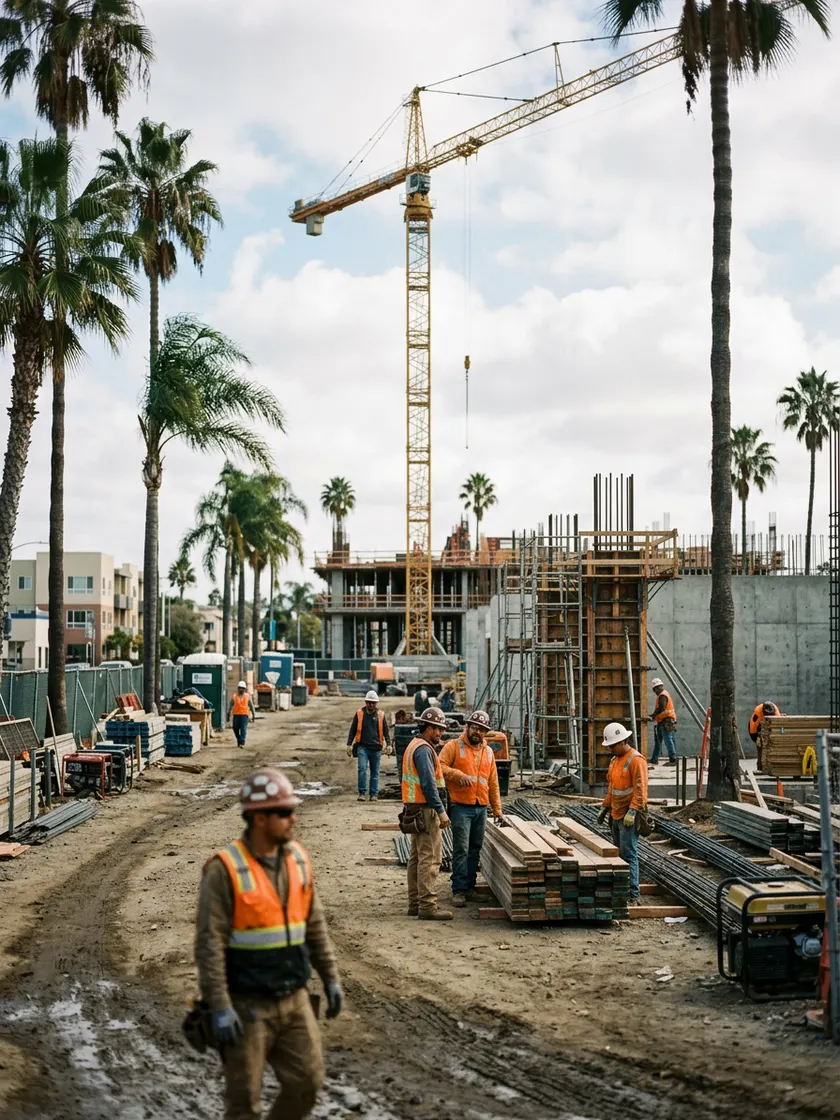
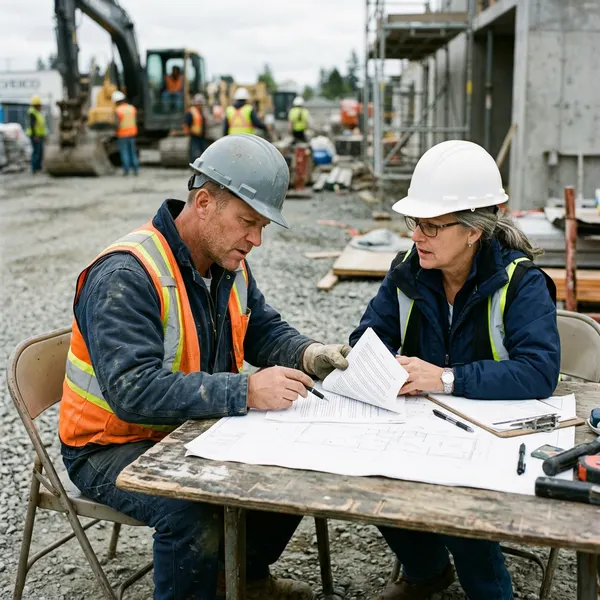
A San Diego County public works bid can come in lowest by a comfortable margin and still be thrown out. Common causes include a subcontractor's Department of Industrial Relations registration number missing from the listing form, an addendum nobody acknowledged, or a license classification that doesn't match the scope of work. These rejections happen routinely. They are almost always preventable.
The opportunities are worth the effort. County Department of Public Works road jobs, City of San Diego water and sewer replacements, school bond projects, Port of San Diego tenant improvements and SANDAG transit work all draw on the same pool of contractors, and many of those projects are sized for small and mid-size firms. Winning them means getting the basics right before bid day. Thresholds, fees and wage rates change often, usually on January 1 or July 1, so confirm current figures with the agencies named here before you price a job.
Getting the CSLB license, bond and insurance in order
Every job starts with the Contractors State License Board. You need an active license in the classification that matches the work before you bid. Agencies check classification at award, not just whether the license is current. A C-10 electrical contractor cannot prime a project that is mostly concrete, and finding that out after bid opening is an expensive lesson.
The minor work exemption, which lets unlicensed persons take very small jobs, rose from $500 to $1,000 for combined labor and materials on January 1, 2025. Conditions apply, including limits tied to permitted work, so confirm a job qualifies before relying on it. It also has no bearing on public works bidding, where a license is a baseline requirement. Before your next bid, confirm the following are current with CSLB:
- Active license in the correct classification (A, B or the specific C class)
- $25,000 contractor's bond on file, the amount required since January 2023
- Workers' compensation certificate, or a valid exemption, on file
- Qualifier and personnel records up to date
- License number on every bid, contract and advertisement
Workers' compensation deserves extra attention. Under SB 216, all licensed contractors, including sole owners with no employees, are slated to carry workers' comp beginning January 1, 2026. If you currently rely on an exemption, get quotes now and check CSLB for the current effective date and any legislative changes.
Staying registered with the Department of Industrial Relations
Public work in California also requires registration with the Department of Industrial Relations as a public works contractor. Registration costs $400 a year and is filed online. You need it to bid on or perform most public works subject to prevailing wage. Projects of $25,000 or less for new construction or alteration, or $15,000 or less for maintenance, are exempt from the registration requirement. Prevailing wage still applies to public works over $1,000, even on projects where registration is not required.
The most common failure is a lapse. Awarding agencies check the DIR database at bid opening and again at award, and a lapsed registration can render your bid non-responsive. A subcontractor's lapse can expose you to penalties as the prime. DIR allows registration for up to three years at a time, which removes the risk of an expiration in the middle of a project. Make checking your subs' registration status part of assembling every bid.
Finding the bids across San Diego's patchwork of portals
No single website covers the region. The County of San Diego, through its Purchasing and Contracting department and DPW, posts solicitations on BuyNet. The City of San Diego uses PlanetBids, reachable through its purchasing pages. Many neighboring cities, including Chula Vista, Oceanside, Escondido and Carlsbad, also use PlanetBids, but each city runs its own vendor registration, so check them individually.
SANDAG, San Diego Unified School District and the Port of San Diego each post through their own procurement pages. Caltrans District 11 work is advertised through Caltrans' statewide contract bid opportunities. Register on every portal that matches your trades, and keep notification categories current so solicitations reach the right inbox.
Once you are pursuing a specific project, register as a plan holder. Addenda go to registered plan holders, and a bid that fails to acknowledge an addendum is routinely rejected. On a busy bid week, a quick check of the project page the day before submission can save the whole effort.
Certifications that can tilt the field toward small firms
Several certification programs can give a small contractor an edge, and they overlap less than people assume. The City of San Diego's Small Local Business Enterprise and Emerging Local Business Enterprise program, known as SLBE and ELBE, offers bid preferences and subcontracting participation goals on City projects. Certification is free. The California Department of General Services certifies Small Business and Disabled Veteran Business Enterprise firms, which helps on state-funded work and with some local agencies.
Federally funded projects run on a different track. Disadvantaged Business Enterprise certification comes through the California Unified Certification Program, and it matters on federal-aid work let by Caltrans, SANDAG and MTS. On those jobs, primes chasing DBE goals document good faith outreach, often including solicitations advertised in trade publications such as The Daily Reporter. Certified firms that watch those notices and respond promptly get invited onto more teams.
How the UPCCAA thresholds decide which bids you even see
Agencies that have adopted California's Uniform Public Construction Cost Accounting Act follow its bidding tiers. AB 2192 raised those tiers effective January 1, 2025:
- $75,000 or less: the agency may use its own forces, a negotiated contract or a purchase order.
- $75,001 to $220,000: informal bidding, with notices sent to contractors on the agency's list.
- Over $220,000: formal advertised bidding.
The middle tier is the one small contractors most often miss. Informal bids go to firms on each participating agency's list of qualified contractors. If you are not on the list, you may never hear about the project. Not every agency has adopted the act, and charter cities in particular may set their own rules, so confirm with each agency whether it participates and how it maintains its list.
This week, pick the five San Diego-area agencies whose work fits your trades. Confirm your CSLB and DIR status is clean, register on each agency's portal, and ask each one how to get on its informal bidding list. That costs you an afternoon and opens up the work most competitors never see.